
Five Things Your TOK Examiner Want You to Know About the TOK Exhibition
By Chrisann Almeida
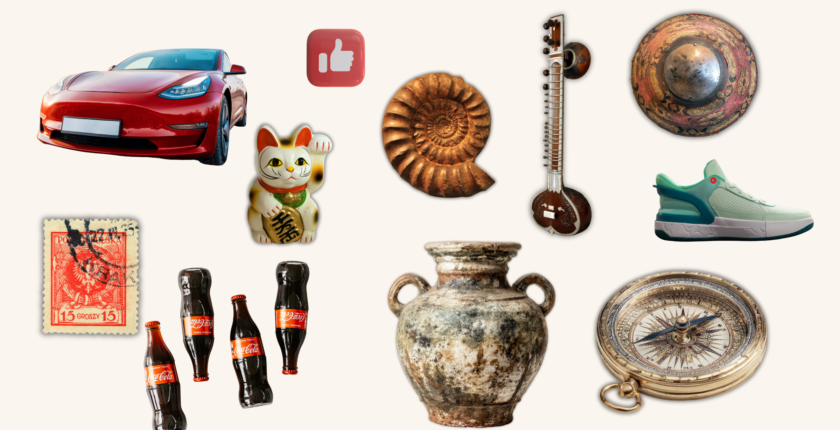
The TOK exhibition is the internal assessment component of the Theory of Knowledge course and is designed to explore the relationship between knowledge and the real world. Unlike the TOK Essay, in this task, students select one prompt from a prescribed list and use three specific real-world objects to demonstrate how the prompt connects to questions about knowledge. Through a short written commentary (maximum 950 words), students explain how each object illustrates aspects of the prompt and what it reveals about the nature, production, or use of knowledge.
Now while this sounds straightforward, we have seen over the last 3 assessment cycles that the TOK exhibition is often misunderstood by students. Many approach it either as something extremely complicated or, at the other extreme, as a simple show-and-tell exercise with random objects. In reality, the goal of the exhibition is not simply to present interesting objects, but to show how everyday items can help us think critically about how knowledge works in the world.
Based on common examiner feedback and classroom experience, here are five important things to keep in mind that can help students produce stronger exhibitions.
1. The Task Is Simpler Than Many Students Think
The TOK exhibition is conceptually straightforward. Students choose one prompt, select three objects, and explain how each object helps explore that prompt with a different lens and varying justifications. Where students often struggle is not the complexity of the task but losing focus on the prompt itself. Many commentaries drift into long descriptions of the object or background information. Others repeat the same link between object and prompt across all three objects – a huge error that leads to a 4/10.
A strong TOK exhibition keeps returning to the central question: How does this object help us explore the knowledge question in the prompt? If students keep this question in mind while writing, they will usually stay on track.
2. Choose Objects with Real Variety
Another common issue is the selection of three objects that are essentially the same type. For example:
- three scientific discoveries
- three artworks
- three historical artifacts
This limits the range of ideas students can explore. The strongest exhibitions usually include variety across objects. For example students can choose one of each of the following:
- a personal object
- a public or historical object
- a digital or contemporary object
This diversity allows students to examine the prompt from multiple perspectives. Examiners frequently note that weaker responses rely on predictable examples that appear repeatedly in TOK work—famous paintings, classic scientific discoveries, or widely known historical cases (TOK subject report 2025-May).Choosing varied and authentic objects often leads to richer analysis.

3. Personal Connection Is Not the Same as Personal Relevance
One of the most misunderstood aspects of the exhibition is the idea of personal connection. Students often think this means the object must be owned instead of being emotionally meaningful to them. As a result, they choose objects simply because they like them or have used them. However, the rubric does not mention the phrase “personal connection”. Personal relevance on the other hand is how well the student can engage and have interest in their object choices, it demonstrates that the student can explain the object’s role in the real world and connect it meaningfully to knowledge questions. For example: Weak personal connection: “I chose this shoe because it is my brand.” Strong personal relevance: “This choice of the cloud shoe illustrates how knowledge in sports is communicated to us via experts like Federer who we consider as authorities, hence their endorsement of a product shapes our understanding.” The second explanation shows how the object functions in the production, communication, or interpretation of knowledge.
4. Popular Prompts Are Not Always Well Handled
Some prompts are chosen far more frequently than others. However, popularity does not mean they are easier. Prompts that students often choose but struggle with include:
- Prompt 12: “Is bias inevitable in the production of knowledge?”
- Prompt 14: “Does some knowledge belong only to particular communities of knowers?”
- Prompt 16: “Should some knowledge not be sought on ethical grounds?”
These prompts attract students because they sound interesting or familiar. However, they require careful handling.
For example, discussions about bias often become general conversations about fairness or prejudice rather than analysis of how bias shapes knowledge production. Similarly, prompts about communities of knowers often drift into discussions of culture rather than examining who has authority over certain knowledge. Students should choose a prompt not because it sounds interesting but because they can identify three strong objects that clearly illuminate it.
5. Objects Must Be Clearly Anchored in the Real World
The exhibition specifically focuses on objects from the real world. This requirement is crucial.Students sometimes include vague or abstract objects such as:
- “social media”
- “science”
- “the internet”
These are not objects; they are broad concepts.
Instead, the object should be specific and identifiable. For example:
- a particular Instagram post
- a specific scientific instrument
- a published research article
- a museum artifact
Examiners also frequently observe that many students use the same well-known examples, which can make exhibitions feel formulaic. What matters is not the fame of the example but how effectively the student explains its connection to knowledge.
The TOK exhibition rewards clarity rather than complexity. Students who select thoughtful objects, stay focused on the prompt, and clearly explain the knowledge issues involved tend to produce the strongest work. In short, the best exhibitions do not try to sound philosophical. Instead, they demonstrate something far more valuable: how knowledge operates in the real world through everyday objects.
Would you like personalized guidance for your TOK Exhibition or TOK Essay? Sign up for Guidance for TOK Exhibition or learn about all our TOK courses. CourseLeap’s TOK tutoring supports you closely with understanding TOK topics, structure, assessment criteria and timelines and is led by highly-experienced, former TOK teachers.