
IB Programme
MYP provides students with a useful foundation in Physics,having been introduced to the basic Physics concepts that include kinematics, heat, light, waves and electricity. The MYP approach also gives them valuable experience with inquiry, investigation and making connections between scientific ideas and the world around them.

Although the IB Diploma Programme (DP) is designed as a natural progression from the Middle Years Programme (MYP), the transition to DP Mathematics is not always as smooth as students expect.
The biggest change is not simply that mathematics becomes more challenging—it is that students are expected to think differently.

Choosing your International Baccalaureate (IB) subjects can feel like trying to solve a high-stakes puzzle. You want classes that look good on paper, sure, but wouldn’t it be better to choose something that actually changes how you interact with the world around you?

Applicants to UK universities are navigating a significant transition toward shared, standardized assessments. This shift simplifies the administrative burden on students, as a single test score can now be used across multiple institutions. Consequently, legacy university-specific tests—such as the MAT, PAT, TSA, MLAT, CAT, and BMSAT—are no longer relevant in the current admissions landscape. Modern assessments now prioritize evaluating intellectual application and reasoning over mere knowledge recall.

With the MYP eAssessments racing towards us, it is completely natural for both you and your child to feel the pressure of counting down the weeks and days.

If you’re in Grade 10 right now, you’re probably juggling quite a bit: half-yearly exams, personal projects, planning ahead for your final exams (MYP e-Assessments, IGCSEs, ICSE/CBSE, you name it).

If you’re in Grade 10 right now, you’re probably juggling quite a bit: half-yearly exams, personal projects, planning ahead for your final exams (MYP e-Assessments, IGCSEs, ICSE/CBSE, you name it).
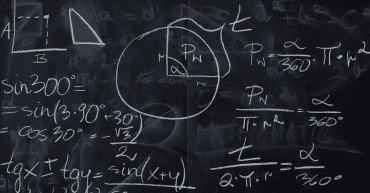
IB Mathematics demands more than just solving textbook exercises or completing past papers—it calls for a deep, conceptual understanding of mathematical ideas. At its core, the IB course emphasizes pattern recognition, logical justification and validation, interpretation of problems and models, strategic use of technology, and effective problem-solving.

If you’re in Grade 10 right now, you’re probably juggling quite a bit: half-yearly exams, personal projects, planning ahead for your final exams (MYP e-Assessments, IGCSEs, ICSE/CBSE, you name it).

As an IB educator, I’ve witnessed the Extended Essay (EE) change over time, and the 2025 update marks some significant shifts in the IB’s new EE curriculum – introduced in 2025, with the first assessment in 2027.