
IB English: A Fresh Take on Literature, Language, and Global Thinking
- May 2, 2025
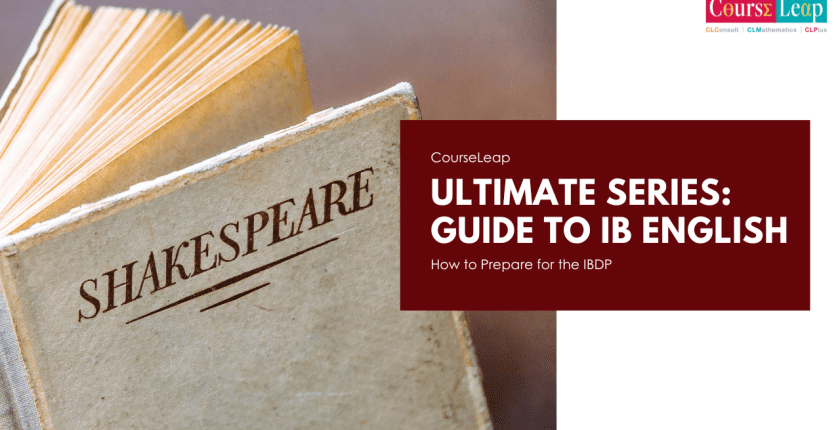
If you’ve ever wondered what sets IB English apart from other high school or IB courses, you’re not alone. In a world brimming with educational choices, understanding the variations of each curriculum can be daunting. But the way the IB approaches English Literature and Language is truly unique, and this article will show you its distinctive landscape and how it shapes students into global thinkers.
So What Makes IB English Unique?
“As part of the Diploma Programme (DP), students take at least one subject from studies in language and literature.” This article refers to the IB courses Language A: Literature, and Language A: Language and Literature, which are usually taken in English. When you think of Grade 11 English you probably imagine reading classic novels and writing analytical essays. But have you considered that the texts chosen are intentionally for the purposes of that specific curriculum? As with all IB subjects, IB English spans a comprehensive program designed to develop critical thinking, cultural awareness, and effective communication. The emphasis on interdisciplinary learning is also one to make note of here. The Language A IB courses encourage students to engage with texts from various cultures and time periods and draw links to different subject areas as well as to contemporary issues or trends, fostering a deeper understanding of the human experience.
In sum, the course seeks to encourage students to widen their perspectives, lean into cultural points of view, dig deeper into their own prejudices and learn not just how to think critically about complex issues but explore their nuances and angle.
Did you know: Language A: literature “is available in 55 languages and, by special request, for any other that has sufficient written literature”, not just English, and Language A: language and literature, “is available in 17 languages”.
How is IBDP English Assessed?
Students are assessed through external IB exams focusing on textual analysis and essays, and internal assessments (30% for HL and 20% HL) through a 10-minute oral presentation. Higher Level students also complete a detailed essay (20% of final grade). The assessments test critical reading, writing, and oral communication skills.
- External assessments focus on written IB exams and essays:
- Analyzing unseen texts (literary or non-literary).
- Comparative studies of works studied in the course.
- Internal assessment (making up 30% of the final grade for SL and 20% for HL) is:
- A 10-minute Individual Oral (IO) presentation analyzing how a global issue is explored across one literary and one non-literary text, followed by a discussion.
- At HL (Higher Level), students have an extra requirement: the HL Essay, a 1200–1500 word formal analysis which is externally assessed and counts for 20% of the final grade.
- The assessments aim to measure skills in textual analysis, comparative thinking, critical writing, and oral communication.
Did you know: You can also choose to write your Extended Essay, an externally assessed research component, in your Group 1 subject if it’s one of your areas of interest, allowing you to further deepen your research in the field of literature and language studies. From ‘How to write Extended essay’ tips and pointers for planning good International Assessments read this blog post.
Preparing for IB English: Beyond the Classroom
Language and Literature provide the tools to communicate ideas, share experiences, express opinions, and exchange knowledge. In a world where AI is increasingly dominant it is becoming ever more important to refine the ability to think for ourselves, and more importantly, to articulate our thoughts. Our IB English tutors are especially mindful of navigating the evolving dynamics of an AI-driven world, guiding students to write with authenticity and originality. Remember that many IB exams are still taken with pen and paper and so it is critical to keep up the habit of handwriting as well.
Here’s how you can prepare for the IBDP English programme and IB exams in a way that’s both engaging and enjoyable.
- Read, Read, Read—All Types of Texts!
- Dive into a mix of poetry, novels, short stories, news articles, magazines and journals of all subjects. Don’t stop there! Explore the words of songwriters like Bob Dylan and Pink Floyd, modern poets like Rupi Kaur, Gregory Pardlo and spoken-word artists like Sarah Kay and Suli Breaks. The more you read, the more you’ll see different types of, and layers in, language and meaning.
- Now Read Again!: Yes, we can’t emphasise reading enough. In How to Read a Book, Mortimer Adler talks about four levels of reading, from elementary to inspectional, analytical and syntopical reading and we highly suggest you follow his advice and start engaging in deeper levels of reading.
- Follow Writers and Poets on Social Media
- Stay inspired and informed by following your favorite authors, poets, and even literary magazines. Social media is a great way to stay updated on new trends, book recommendations, and creative insights.
- Engage in Thoughtful Discussions
- Whether it’s breaking down films, books, or novels with friends, having conversations about characters, plots, themes, points of view and motivations can help you challenge your perspectives and learn from others’ viewpoints.
- Join a Book Club or Start One!
- Being part of a book club, even if it’s just friends and family, can push you to read more and think deeper.
- Keep a Journal
- Start writing a few lines a day, making a daily habit out of it. Don’t overthink it. If you feel limited by a certain framework (e.g. the old ‘dear diary’ trope), break out of it and create your own rules. Just make sure you write regularly.
- You can write about anything: whether it is poetry, an idea for a story, some personal reflections or your thoughts on a certain current affairs. For e.g. you can choose one article a day and write a few reflective lines on it.
- Practice Writing from Different Perspectives
- Writing is a huge part of IB English. Challenge yourself to think deeply on a topic, explore all the angles, write contrasting arguments and take multiple perspectives. Practice considering alternate points of view and questioning your own biases, for e.g. write a chapter from the perspective of the villain.
- Pro Tip: Use the summer holidays to maximise your IBDP performance! At CourseLeap we offer Pre-IB summer courses specially designed to give students a boost before they start Grade 11! Our specialist English teachers offer exceptional IB tutoring, tailoring each session to your individual strengths and interests for maximum engagement and success.
Language A is one of those IB courses that offers a unique and enriching experience that goes beyond traditional high school English classes. It encourages you to develop your voice and build empathy, objectivity, eloquence and creativity, helping you see the world through a wider lens. The course not only emphasizes language proficiency but also nurtures global awareness and the ability to engage with complex issues from multiple perspectives. Our distinct style of IB Tutoring helps you embrace the challenges and opportunities of the IB English curriculum, you don’t just learn to read and write—you learn to think, question, and contribute meaningfully to the world around you.
Reading List:
How to Read a Book, Mortimer J. Adler and Charles Van Doren
On Writing: A Memoir of the Craft, Stephen King
The Elements of Style, William Strunk Jr. and E.B. White
The Norton Anthology of English Literature
Things Fall Apart by Chinua Achebe
A Separate Peace, John Knowles
Beloved, Toni Morrison
King Lear, William Shakpeare
CourseLeap Offers IB Tutoring for English through the following IB courses:
Pre-IB Languages, Individuals & Societies and Sciences
Guidance for Internal Assessments
Guidance for Extended Essay
MYP Tutoring
If you liked this article you might also like:
SEARCH
STAY IN TOUCH
CATEGORIES
- ALL (0)
- IBDP (18)
- MATH (17)
- MYP (1)
- NEWS & EVENTS (5)
- UNIVERSITY (1)